Design, engineering and technical work built to tour.
· Lighting Designer · Technical Manager · Set Electrics Designer
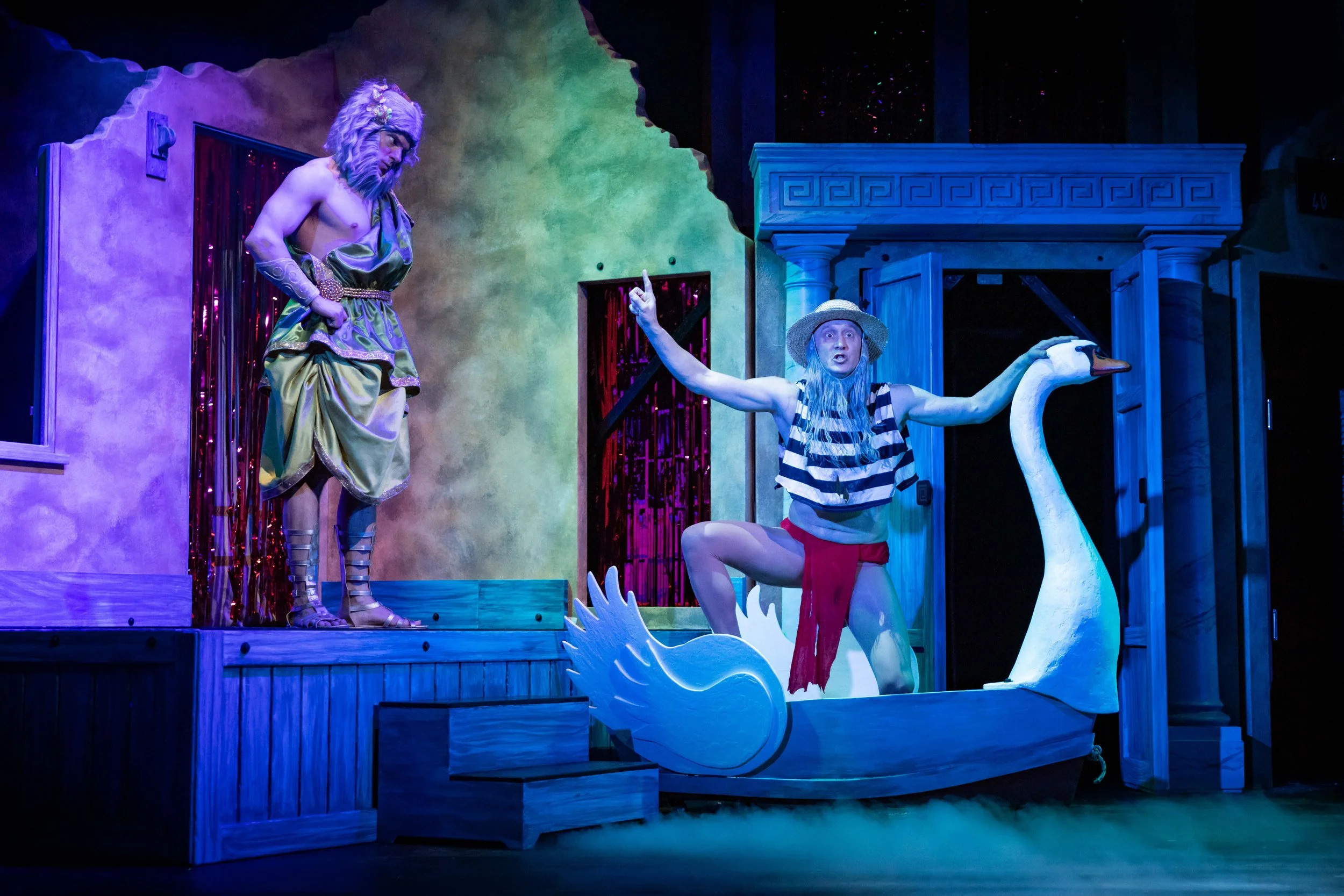
Oh Zeus!
Lighting and technical design for Le Navet Bête’s large-scale
touring comedy, combining layered lighting, sound, practical
effects and extensive set electrics designed and built
specifically for the production.
The set includes integrated lighting, controlled effects and
timed bell drops, all designed to operate reliably while touring
and adapt efficiently to a wide range of UK venues.
Lighting design
Technical management
Set electrics
Practical effects
Touring system design
· Lighting Designer · Set Electrics Designer
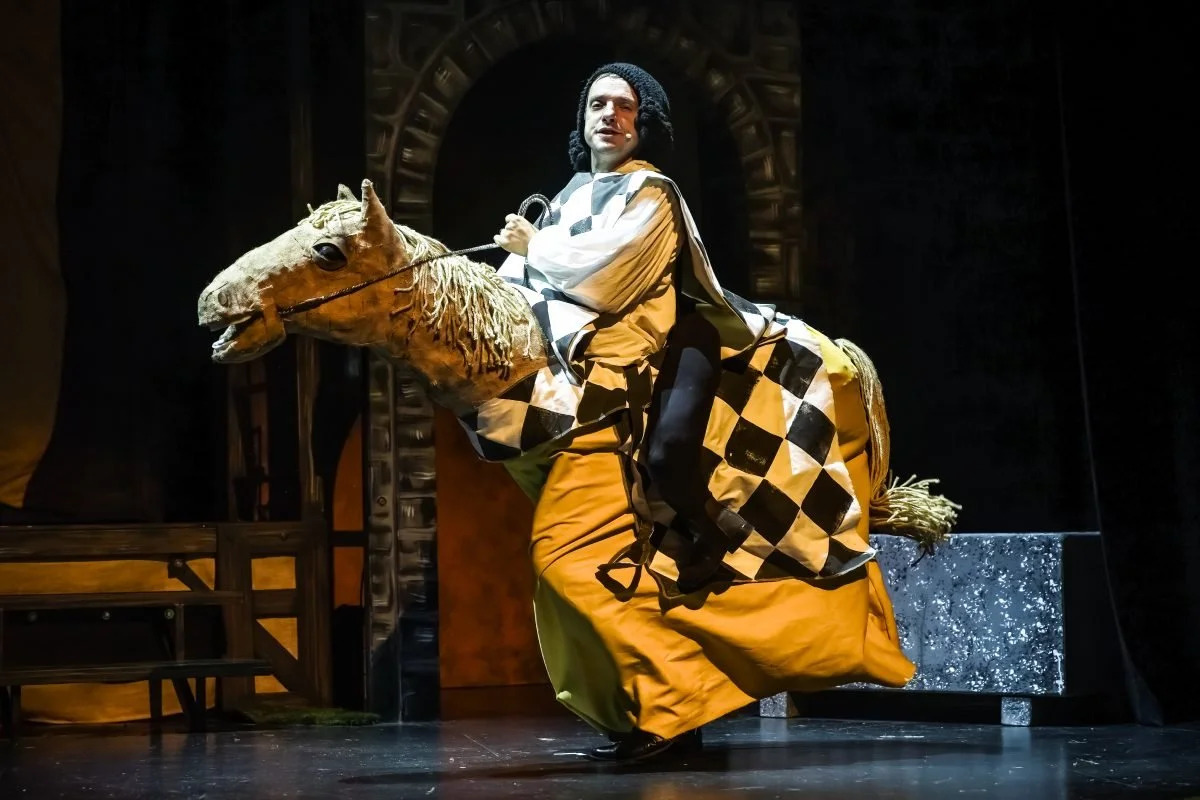
King Arthur
Lighting design and set-electrics development for Le Navet
Bête’s national touring production.
The design combined theatrical lighting with integrated
practical effects and electrical systems built into the set. It
was developed to relight quickly, remain visually consistent
between venues and withstand the practical demands of touring.
Lighting design
Set electrics
Practical effects
Touring optimisation
· Lighting · Sound · Set Electrics · Touring Systems
Holmes & Watson
Complete technical design and build for a compact touring
production, delivered as a self-contained package that could be
handed to a receiving venue for straightforward installation
and operation.
Lighting, sound, QLab programming, set electrics, practical
effects and show control were designed as one integrated system,
allowing local technicians to run the show consistently with
minimal adaptation.
Complete touring technical package
Lighting and sound design
Set electrics
QLab and show control
· In-set Lighting · Production Electrics
RI Christmas Lectures
Design and installation of lighting integrated directly into
the set for the Royal Institution Christmas Lectures.
The work required practical, reliable and camera-conscious
lighting solutions that could be incorporated cleanly into the
scenic design while remaining accessible for testing,
maintenance and production use.
In-set lighting
Production electrics
Scenic integration
Testing and maintenance access
· Venue Adaptation · Touring Relight
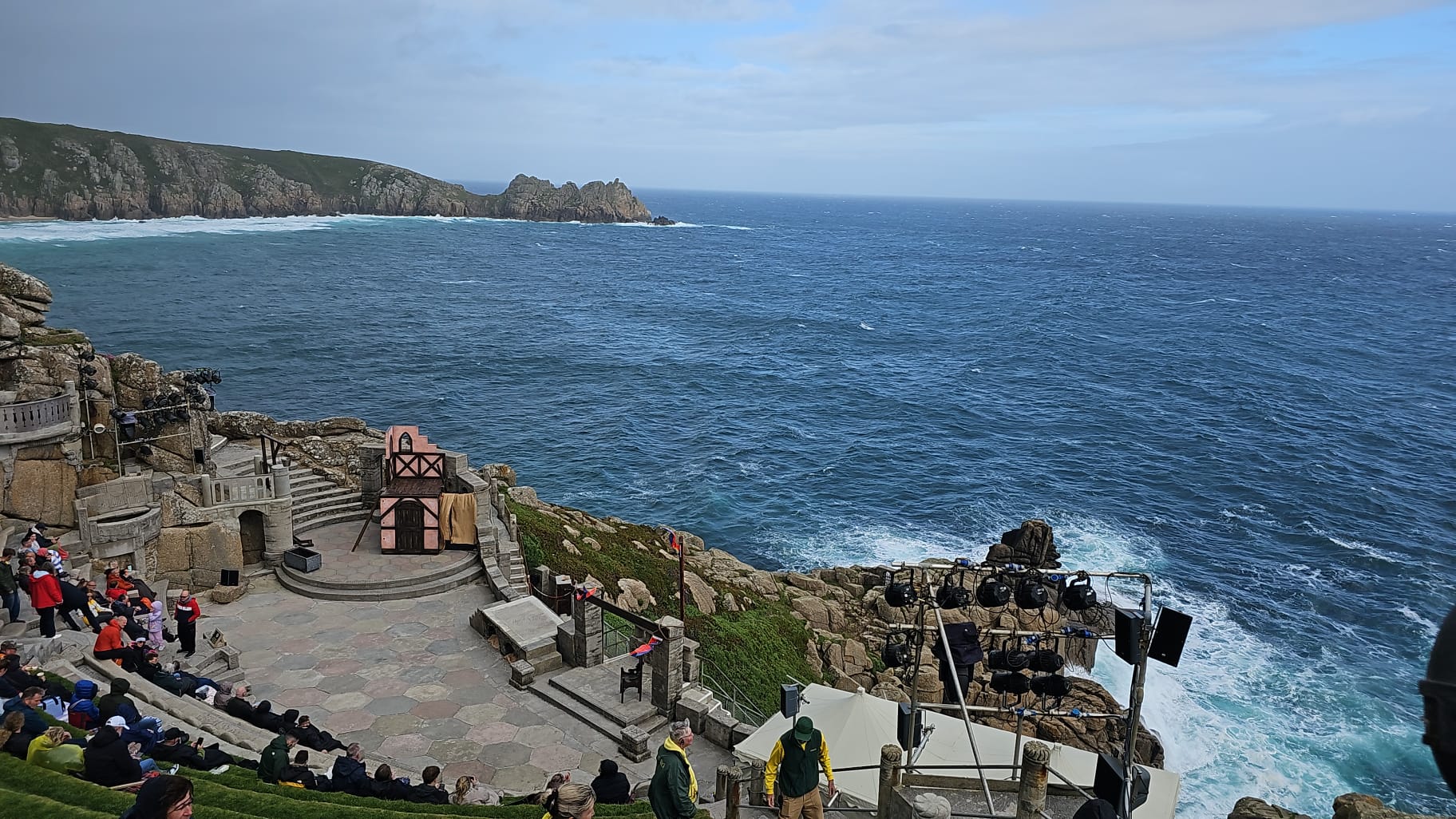
Performing at the Minack
Adapting touring productions for the Minack Theatre requires
substantial on-the-day problem-solving to account for its unique
layout, lighting positions, sightlines and open-air environment.
Weather, daylight, wind and exposure add further challenges,
often demanding fast changes to staging, cueing and technical
systems while preserving the original design and storytelling.
Venue-specific relights
On-the-day adaptation
Weather-led technical changes
Touring problem-solving
· Touring Relight · Lighting Redesign
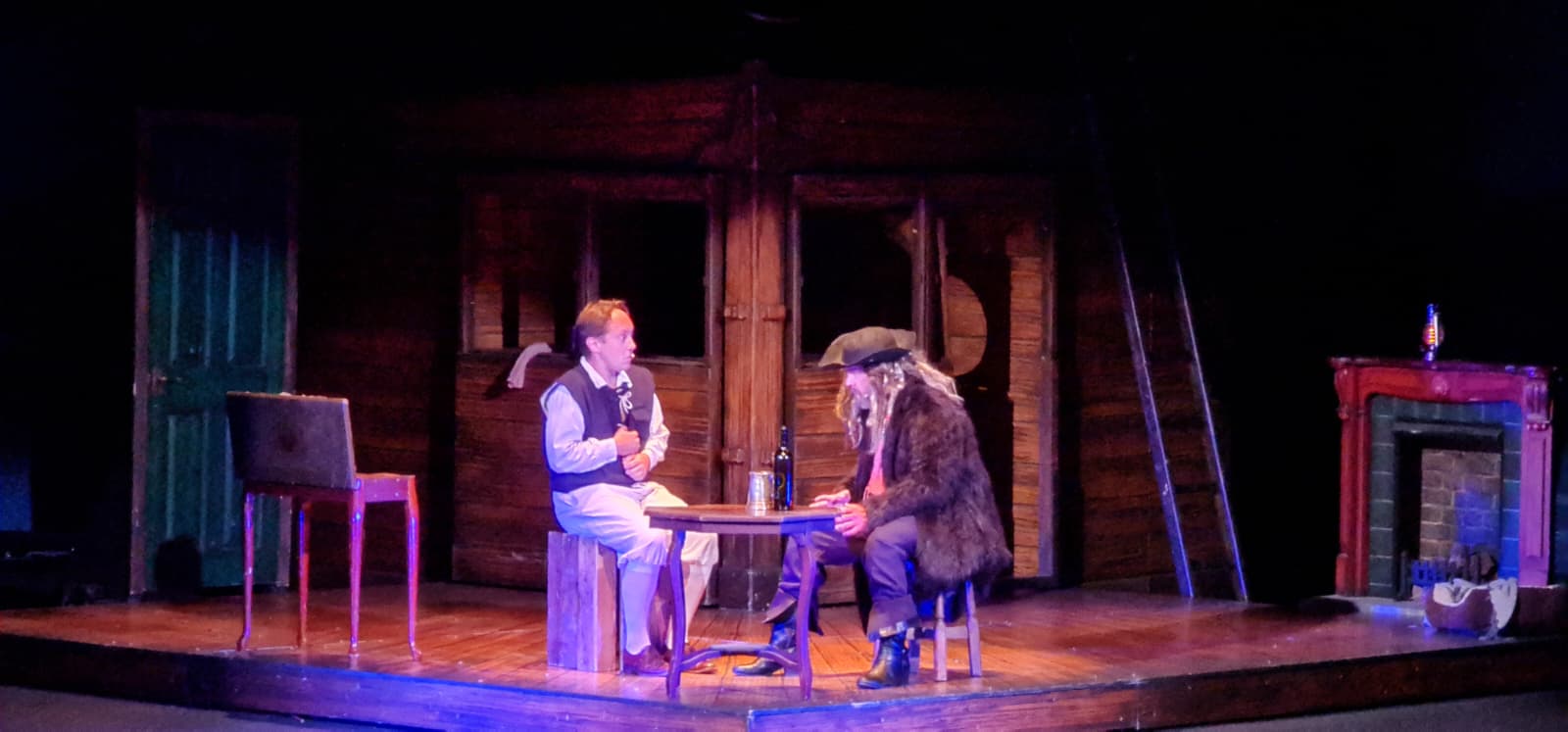
Treasure Island
Relighting and redesign work for Le Navet Bête’s touring
production, focused on improving touring efficiency while
retaining the strongest visual elements of the original show.
The revised approach simplified venue-to-venue installation and
made the design more adaptable across theatres with widely
differing technical facilities.
Lighting redesign
Touring relight
Faster fit-ups
Venue adaptability
· Touring Relight · Lighting Redesign
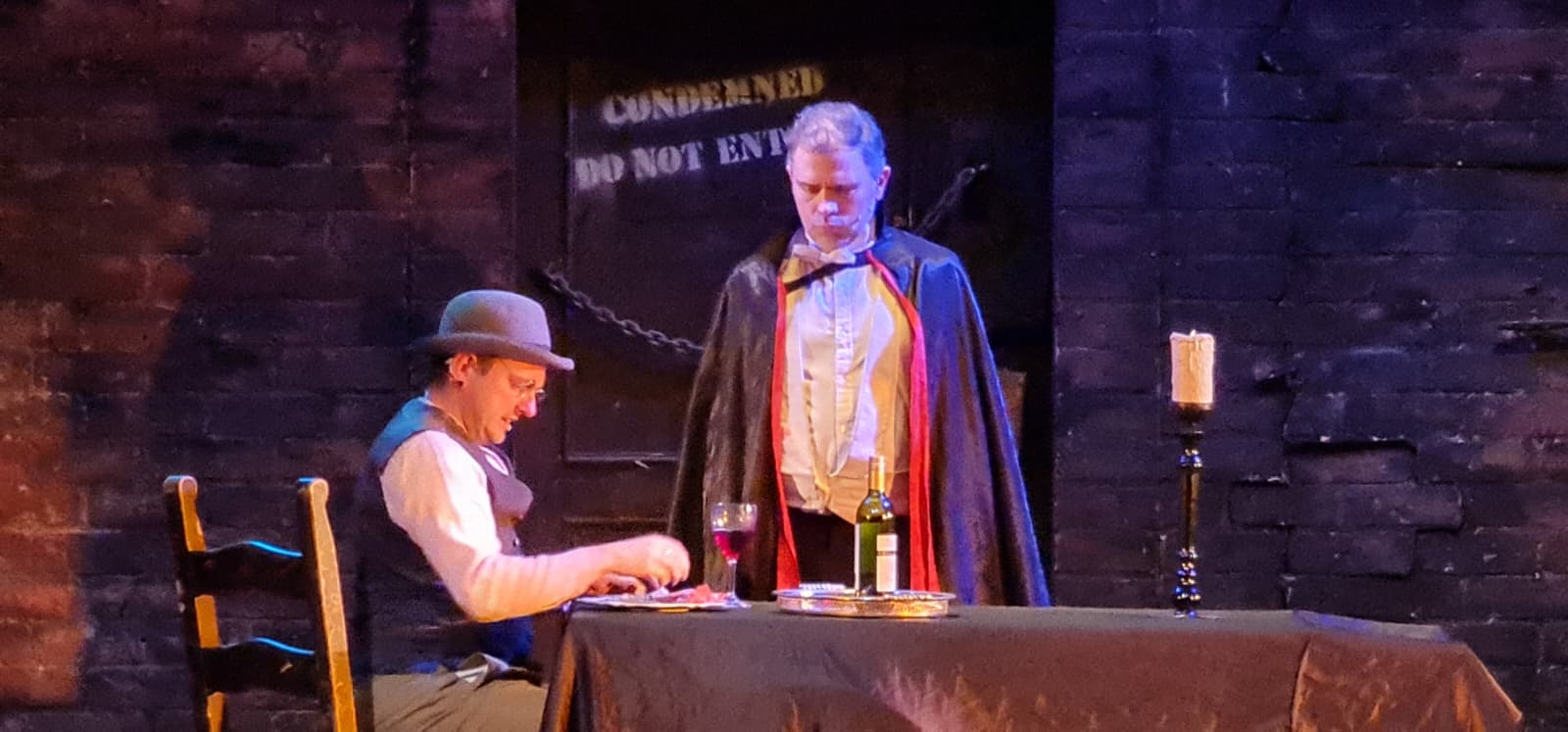
Dracula: The Bloody Truth
Lighting redesign and touring development focused on making the
production faster and more efficient to tour while retaining
its dramatic atmosphere, comic timing and distinctive visual
style.
The show was adapted to work consistently across venues of
different sizes and technical capabilities.
Lighting redesign
Touring development
Fit-up efficiency
Cross-venue consistency
· Touring Relight · Programming
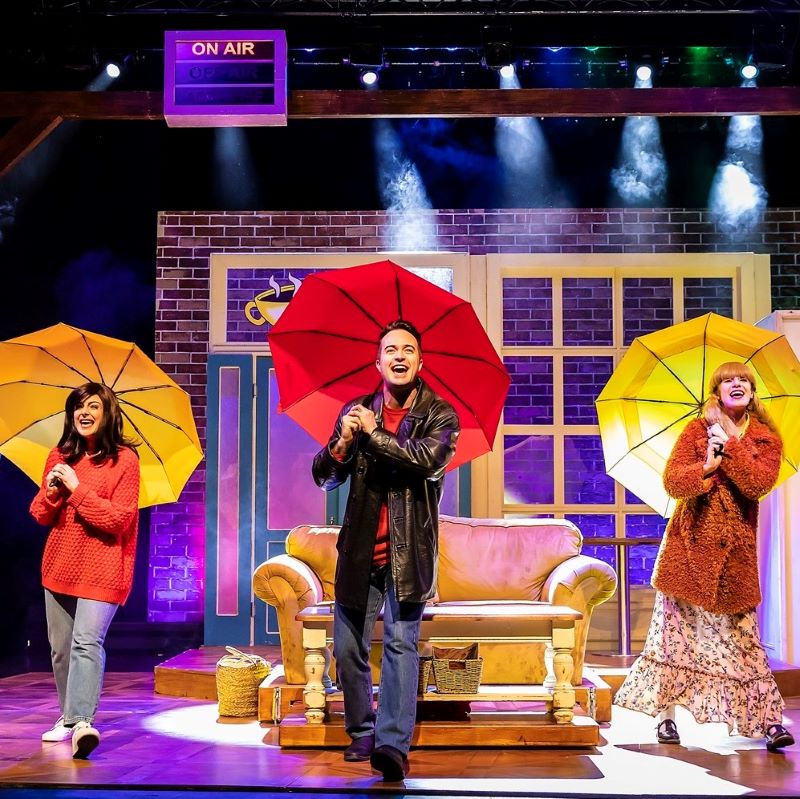
Friendsical
Assisting Programming, technical support and touring relight work for a
fast-paced musical comedy production.
The work included adapting the existing lighting design to
different venue rigs, maintaining consistency across the tour
and resolving venue-specific technical challenges during fit-ups.
Touring relight
Programming
Venue adaptation
Technical support
Capabilities
More than a lighting plot.
Productions work best when their creative and technical systems are
designed together. I can contribute at one point in that process or
take responsibility for the complete touring package.
01
Lighting Design
Creative lighting developed around performance, storytelling,
comedy timing and the realities of touring venues.
02
Technical Management
Planning, advancing, fit-ups, documentation and practical
coordination that keep productions calm and achievable.
03
Set Electrics & Effects
Integrated lighting, controlled practical effects, mechanisms and
safe electrical systems designed and built into scenic elements.
04
Touring Systems
Self-contained technical packages engineered for repeatable
installation, straightforward handover and cross-venue consistency.
05
Show Control & Networking
QLab, EOS, DMX, sACN, Art-Net, control networks and integrated
systems that make complex productions manageable.
06
Teaching & Collaboration
Experience supporting and teaching students, informed by Master’s-level
study in academic practice. Clear, adaptable communication with
performers, creatives and technical teams. Enhanced DBS checked.
Act IIHow I Got Here
How I got here
The story behind the work.
It starts with curiosity, takes a few unexpected turns and eventually
explains why I approach productions as complete creative and
technical systems.
1977 onward
A family of makers
I grew up surrounded by people who made things.
Before I was born, my father built our home computer from a
Tangerine kit and housed it in a hand-built wooden case. He
repaired our cars and taught me how to work on mine. When one of
my first cars needed an engine rebuild, we stripped it down
together, had the cylinders rebored and rebuilt it piece by piece.
In time, he also built the house we lived in.
My mother spent her entire career as a seamstress. Beginning in
London’s fashion cutting houses before going on to run her own
bespoke dressmaking business, she dedicated her career to a craft
that demanded patience, precision and an exceptional eye for detail.
Growing up, making things was not unusual; it was simply how
problems were solved. If something broke, you fixed it. If it did
not exist, you worked out how to build it.
Around 1981–82
It started with a torch
Apparently, I’ve been doing the lighting for longer than I can remember.
I am told that, outside my aunt’s house in Cardiff, I stood with
a torch and a tennis racket trying to make patterns across the
front of the building. When anyone asked what I was doing, I
replied: “I’m doing the lighting.”
I do not remember it. My family do. Apparently, not much has changed.
From age five
Taking things apart to understand them
I never really enjoyed breaking things. I enjoyed understanding them.
My first computer was a Texas Instruments TI‑99/4A, with its
distinctive black keyboard and brushed aluminium case. Later came
a Compaq PC, while our home became one of the first in the area
with internet access and probably one of the only houses for miles
with its own 10Base‑T network.
Curiosity quickly became practical. I took plugs apart, sat in a
skip stripping components from a television with a soldering iron,
built joined bicycles into a tandem and assembled my own DJ setup
and lighting from component kits bought from Maplin and Radio Shack.
Theatre later became the place where that curiosity found a
creative home. I understood how equipment worked before I
understood lighting as an art; studying and practising theatre
showed me how technology could shape emotion, timing and story.
Around 16
The first control system
At sixteen, I decided to build my own lighting desk.
After first using a Pulsar desk at school, I wanted to understand
how lighting control worked rather than simply operate it. With
help from my physics teacher, I designed and built a prototype
computer-controlled lighting desk around a BBC Micro.
RAM chips and digital-to-analogue converters stored values for
each channel and controlled thyristor circuits. It was all built
by hand — an early version of the same instinct that now drives
my touring systems, set electrics and show-control work.
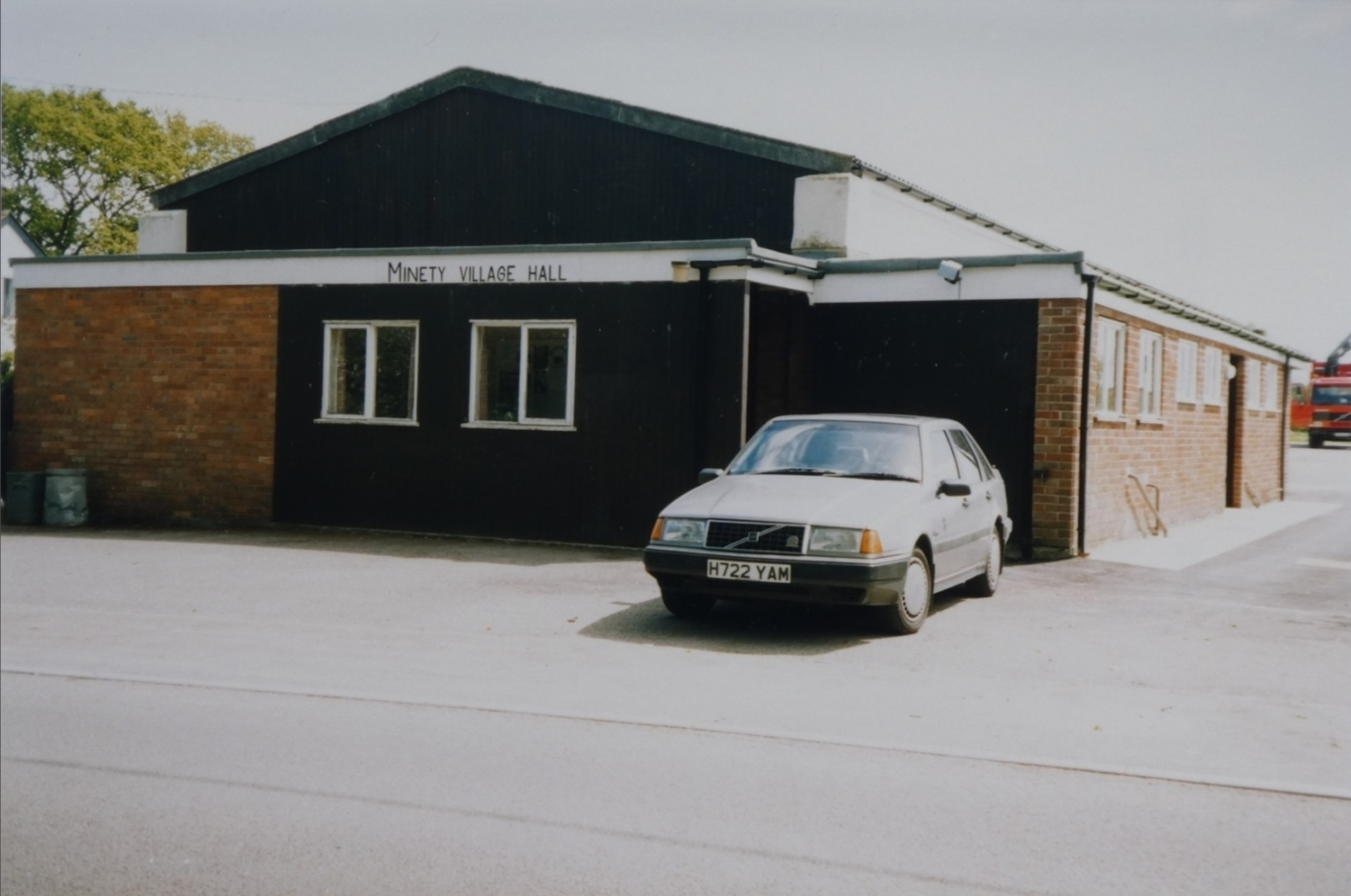
At roughly the same age, I also built and installed lighting
bars in my village hall, scrounging equipment from wherever I
could to give its “old time musical” productions some proper
technical theatre.
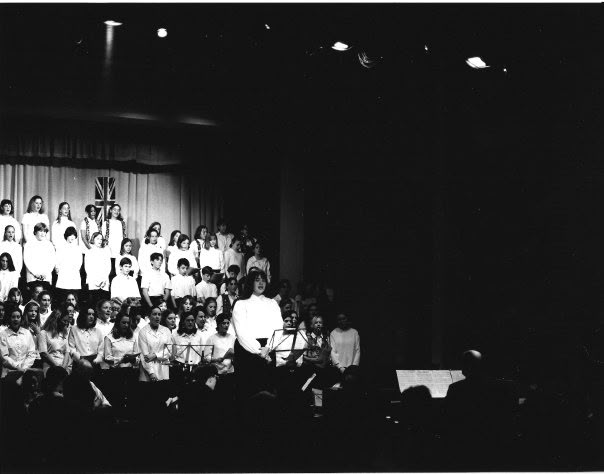
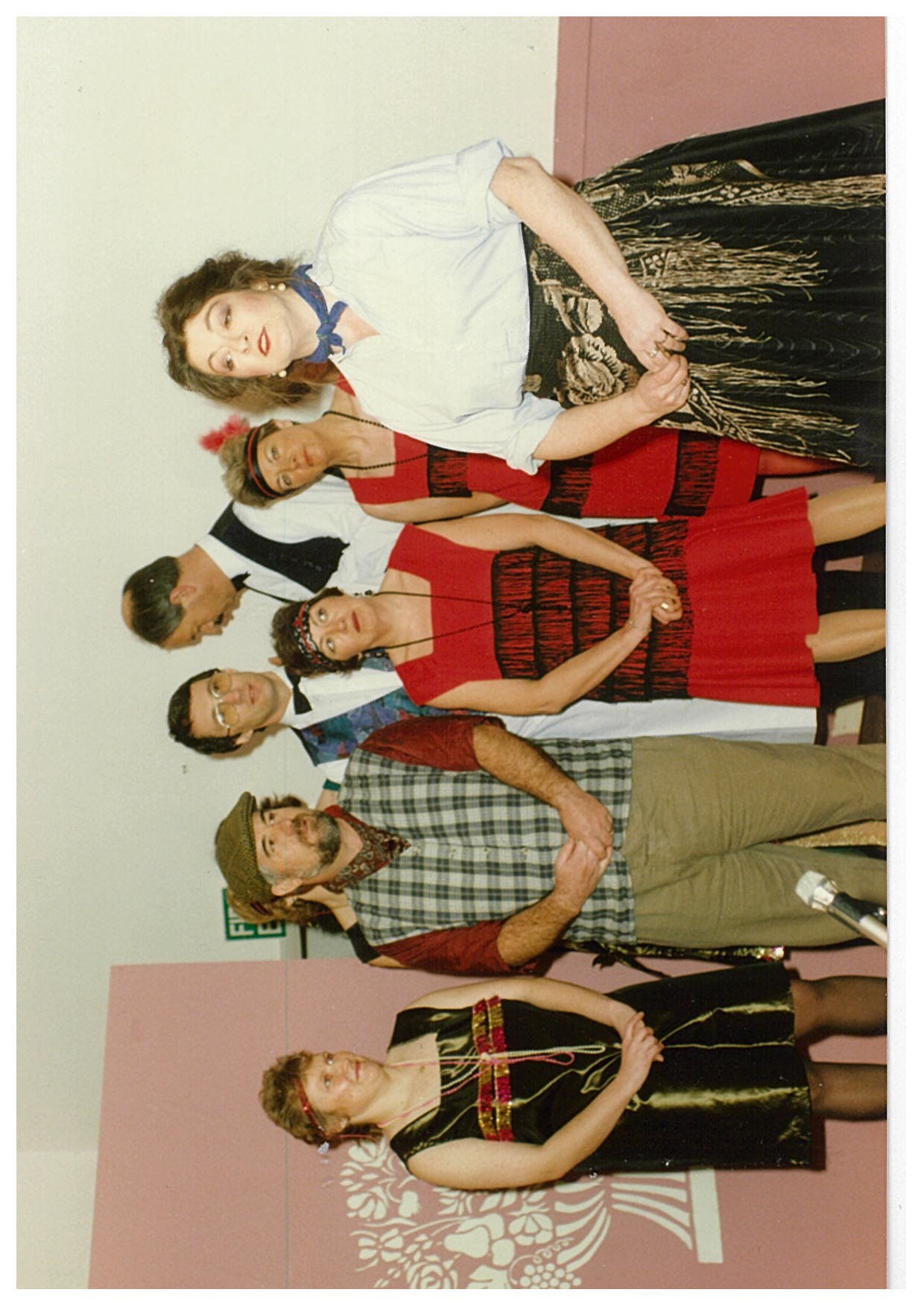
School productions and Minety Village Hall, where I built lighting bars and pieced together equipment as a teenager.
There is no photograph of the BBC Micro desk. It was built long before carrying a camera in your pocket was normal; what survives is the way it taught me to think about control systems.
School years
“This is where I belong.”
I skipped class because I had already decided where I belonged.
Theatre first excited me at school: being part of a group,
helping make something happen and having something useful to
offer. I understood how much of the equipment worked, but I had
not yet learned the art of lighting.
My first show was an outdoor production of Grease, where
I worked on sound. I skipped a class to attend rehearsal. When my
home economics teacher came to find me, I told her that this was
where I belonged and what I wanted to do as a career. The
conversation did not go especially well, but I stayed.
“This is where I belong. This is what I want to do.”
College
Learning the whole stage, not just the lights
At the time I thought they were making the wrong decision. They were absolutely right.
I applied for a BTEC in Performance with a lighting bias. Instead,
I was pushed towards stage management on the basis that I already
understood the basics of lighting and needed to understand the
other backstage roles. I disagreed at the time, but it was the
right decision and gave me a much broader understanding of
stagecraft.
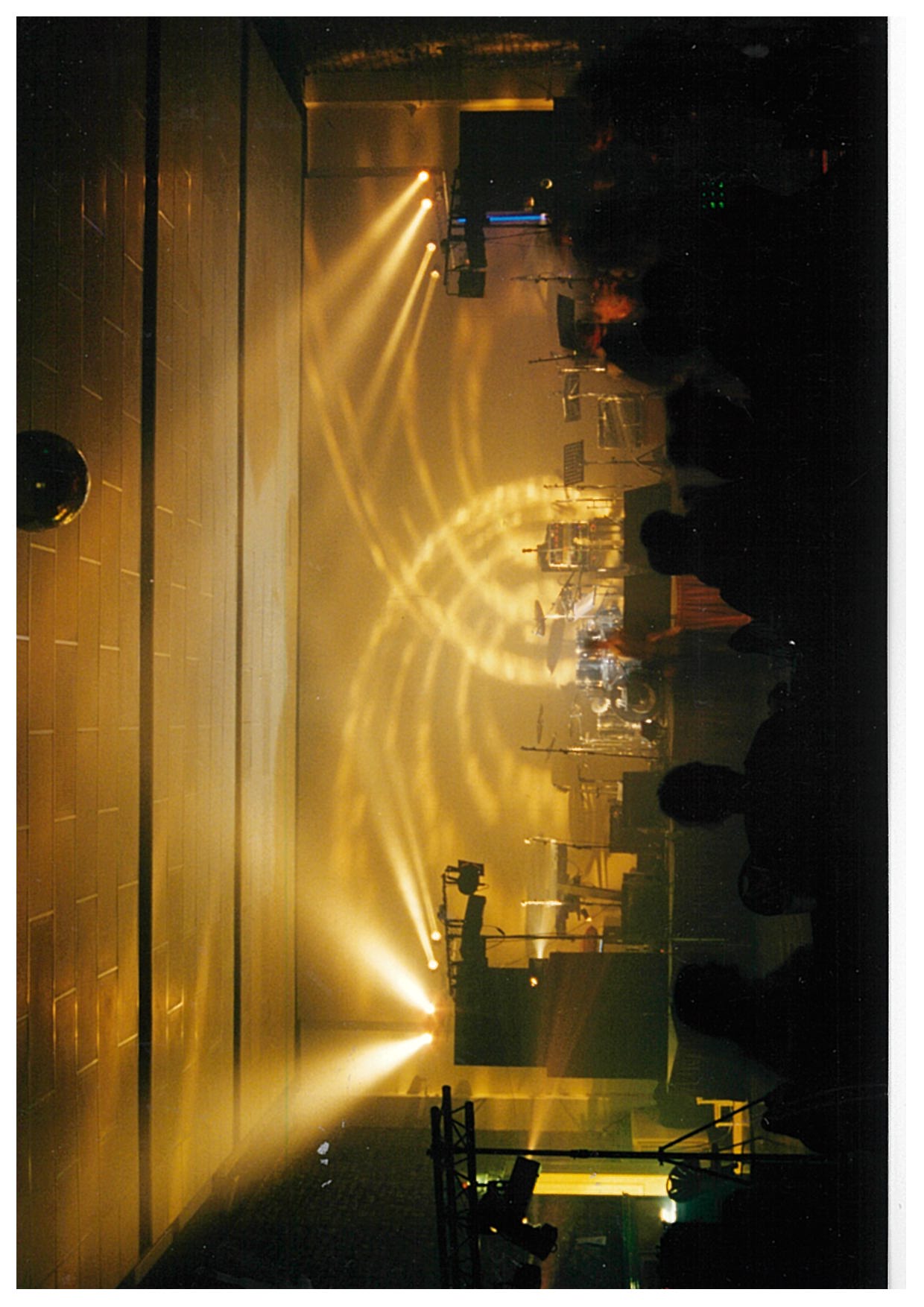
Around the same time, I became lighting operator for the
13-piece soul band The Soul Destroyers — my first proper paid
work. I continued lighting them until moving to Devon in late
1999. I still love live music lighting, but theatre and its
creative possibilities have always felt like home.
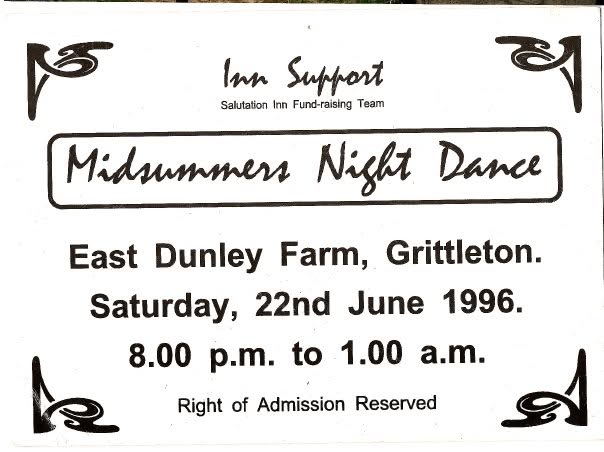
Early live-music work with The Soul Destroyers and a surviving event ticket from 22 June 1996.
The long way round
Computing was never really a detour
It gave me another set of tools to bring back to theatre.
After struggling to establish myself in professional theatre in
Wiltshire, I moved into another field I understood: computers. I
worked for a small healthcare business building databases before
joining Lucent in Malmesbury, where I brought practical and
telephony skills into Tier 2 support from October 1998 to October 1999.
With Y2K approaching, I decided it was time for a change. I moved
to Devon, worked with an events company and through several roles
before joining the University of Plymouth in 2005.
I had kept my hand in with occasional smaller lighting and live
event work. By the time theatre became the centre of my working
life again, the industry had changed: lighting desks had become
computers, show control had become software and networking had
become part of everyday production.
The computing, telephony and networking knowledge I brought back
proved invaluable. Those years did not take me away from theatre;
they gave me the skills to bridge creative ideas and the
increasingly connected systems behind modern productions.
From 2005
Enthusiasm opened the door
I got the job not because I had all the skills, but because I had enthusiasm.
When a technical role became available within the university’s
Theatre and Performance department, I applied and said at
interview: “This is my dream job.”
I got the job not because I already had every skill they needed,
but because I had enthusiasm. Over the next ten years I embedded
myself in the department, supporting incoming companies,
productions and student work while continuing to learn.
“I got the job not because I had all the skills, but because I had enthusiasm.”
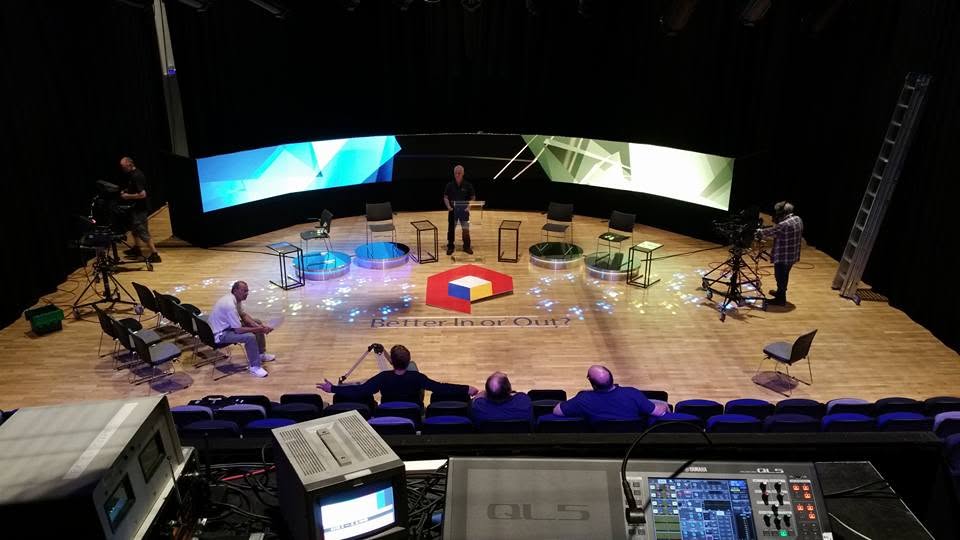
At the university control position: theatre, technology and teaching coming together.
Master’s
Performance Practice
Dial a year and hear a story
Curiosity eventually led me to undertake a Master's in Performance
Practice. Having never completed an undergraduate degree, I was
accepted on the strength of my professional experience together
with written work. Over two years I explored the meeting point
between performance, programming, telecommunications, engineering
and storytelling.
After completing my Master’s, I undertook the introductory module
of the Postgraduate Certificate in Academic Practice (PGCAP),
gaining Master’s-level credit. This was the element required for
my role rather than the full PGCAP qualification.
The module explored different teaching methods and reinforced
something I already understood from my own education: everyone
learns differently. It continues to shape how I explain technical
ideas, support students, advance productions and hand over complex
touring systems.
One solo piece used software I wrote to announce one of ten
movements at random. Every two minutes I used that movement to
untangle a long rope: listening to the rope, working with its
knots rather than fighting them. It is still a useful way of
thinking about technical problems.
My final autobiographical installation placed telephones in a
field on the farm. The assessors sat on straw bales within the
footprint of the house we were building, outlined in telephone
wire. By dialling any year from 1977 to 2016, they could hear a
story from my life — or, in the earliest years, one told by my
parents.
I ran a real telephone exchange for the piece using the
open-source Asterisk platform, allowing the external examiner to
dial in remotely to experience and assess the work.
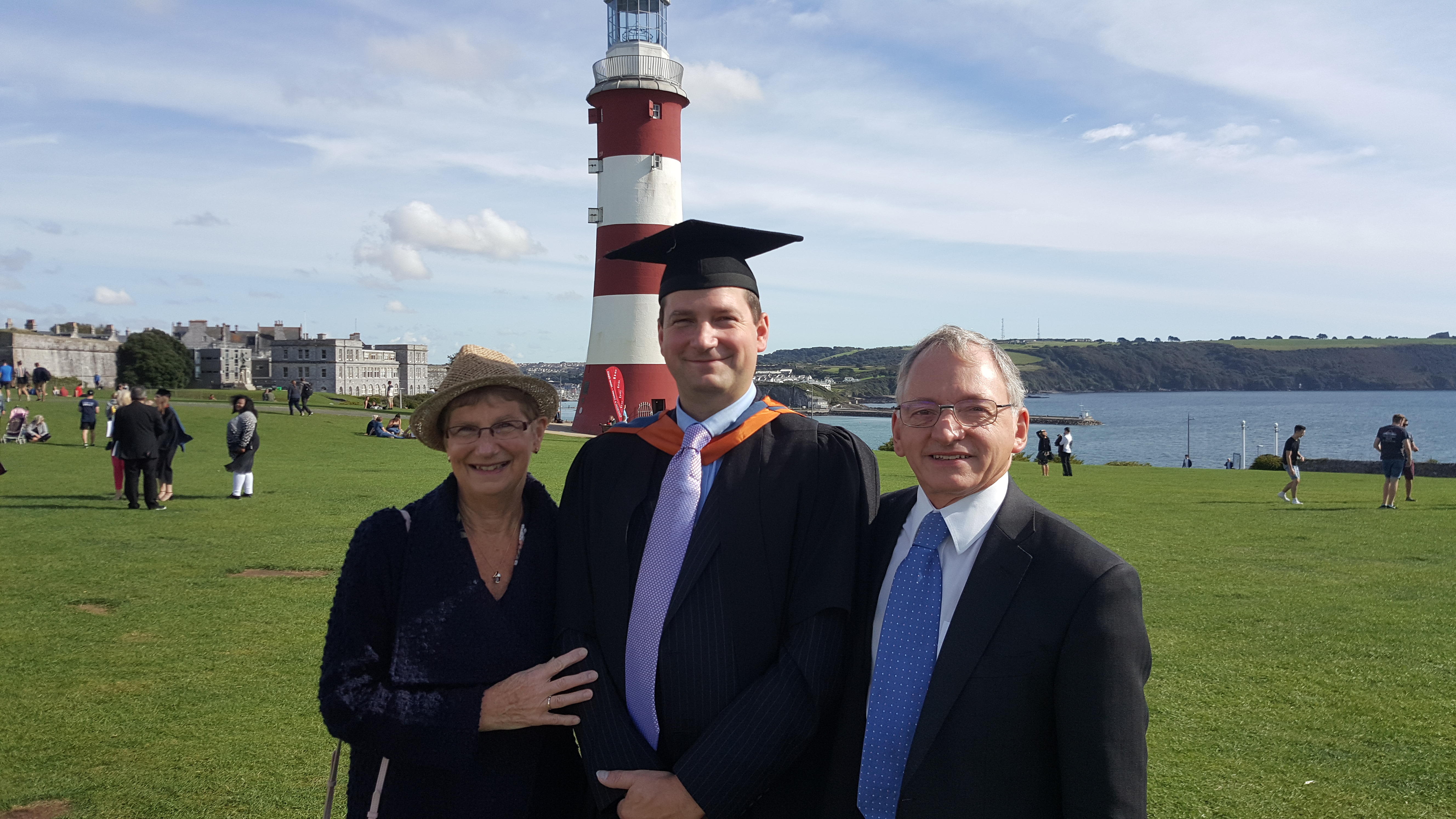
MA Performance Practice, awarded 30 October 2013.
Teaching
Everyone learns differently
Teaching helped me make technical knowledge useful, not merely correct.
After completing the Master’s, I gained a teaching qualification. Exploring different teaching methods reinforced what I already knew from my own schooling: there is no single right way to explain an idea.
That understanding shapes how I work with students, performers, creatives and venue technicians — whether I am demonstrating a desk, writing an advance or handing over a complete touring system.
Teaching through practical work: finding the explanation that makes sense to the person in front of me.
Le Navet Bête
A partnership years in the making
I had followed their story for years. Then they asked if I knew anyone.
Le Navet Bête had graduated from Plymouth University shortly
before I joined the department. As alumni, they returned as
visiting practitioners and with Christmas productions, so I had
followed their story from near the beginning.
Later, while freelancing for the Barbican Theatre, I looked after
them at the Athenaeum in Plymouth. Rather than simply opening the
building, powering up and sitting back, I got stuck in: helping
build props, solving lighting and sound problems and supporting
whatever the production needed. I did the same the following year
with Treasure Island.
When their Technical Director changed career after Covid, they
asked whether I knew anyone who might be interested. I said I
would. They were delighted, and a brilliant partnership began.
Turning points
The moments that made it feel real
Lowry, Edinburgh and the first reveal of a lit set
Standing at the technical position on the Lowry’s Lyric stage
after Covid was a magical moment. Theatre was on its knees, yet I
was moving forward, controlling a major venue and trusted with a
company’s show.
At the Edinburgh Fringe, I designed a lighting plot for
Friendsical — a show I had never seen — in one of the
festival’s leading venues at the Assembly Rooms. When Miranda
later sat with me in a bar and said they would love me to join
the tour, it felt like another “have I made it?” moment.
Even now, one of the best moments is watching Le Navet Bête walk
into a newly lit set for the first time. With the added set
electrics, I can now say: “It looks good — but watch this,” and
make the world time-travel, pulse or transform into the
underworld.
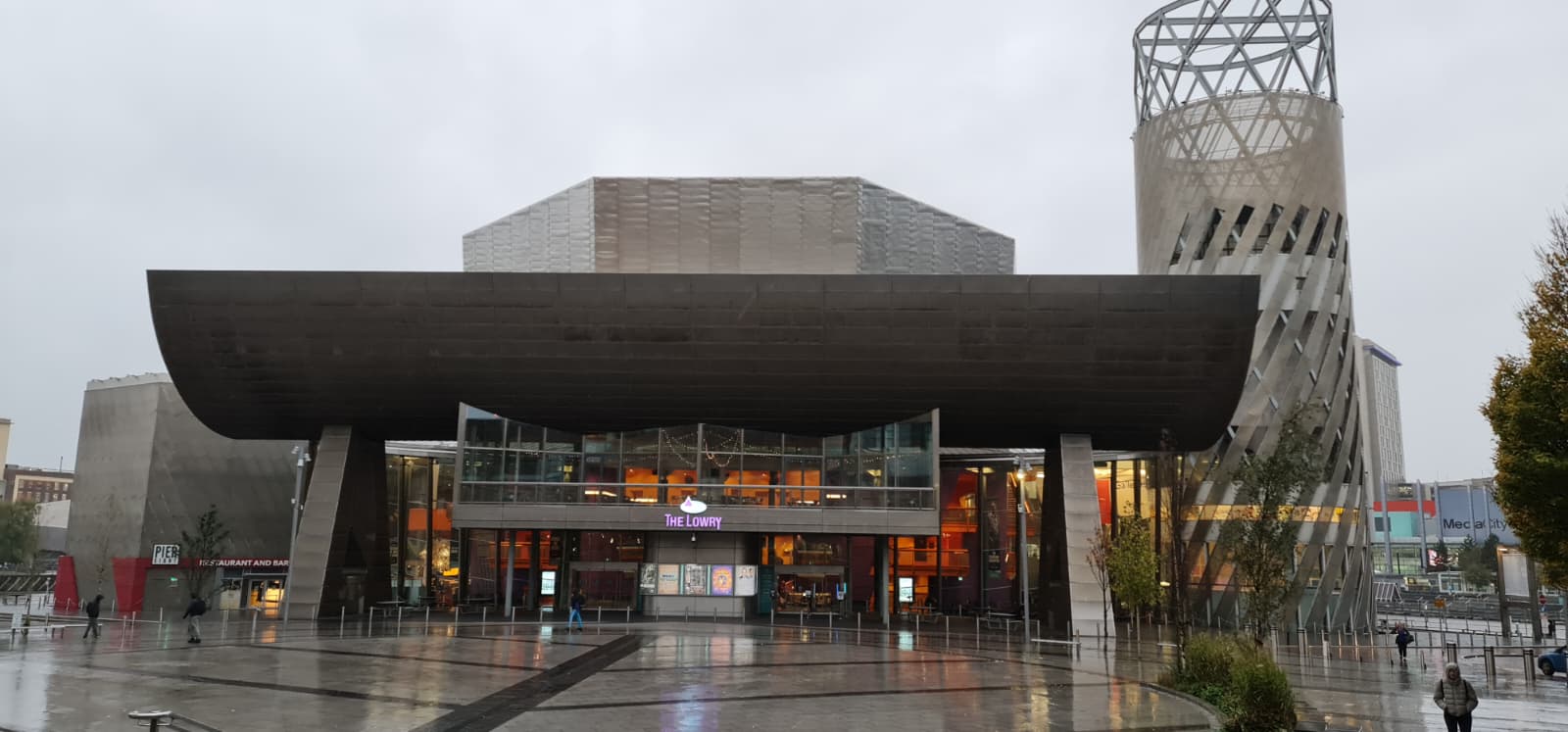
The Lowry, Salford Quays — one of those arrivals that made me stop and take in how far the journey had come.
Today
All the threads come together
Creative ideas made practical
Today, the things that once looked unrelated — lighting,
electronics, theatre, networking, teaching, programming,
electrical work and telecommunications — come together in the
same projects.
I design lighting and sound, build set electrics and practical
effects, create show-control and touring systems, adapt
productions for unusual venues and help companies turn ambitious
ideas into reliable shows.
Outside theatre, I became the internet service provider for our
valley because nobody else was going to do it. I now also look
after Totnes Christmas Market and its light switch-on because,
after the lights failed one year, they brought me in to make sure
it did not happen again.
Touring is design, control, collaboration and logistics — often all in the same day.
“Good technical theatre is calm when everything is falling in,
because there is a plan.”
My favourite part of the work is the community: meeting people
who know people I know, and sharing an appreciation for the
craft even when we have never been in the same room before.
I know I have done my job well when the jokes land at exactly
the right moment because the technical timing has worked.
What audiences rarely realise is that at 8am none of it was
there — and five minutes before the doors opened, someone was
probably still making a final adjustment or searching for the
missing prop.
Selected reviews
What others saw.
A curated selection of comments that specifically recognise the lighting, timing and visual storytelling.
“Beauty shines in Stuart Billinghurst’s masterful lighting.”
Mature TimesOh Zeus!, 2026
“It's not often you see lighting used as part of the joke and the comedy… little nuggets of magnificence!”
Manchester TheatresOh Zeus! · Lowry · 2026
“The lighting was used very skilfully… great comic timing by the lighting operator.”
My View From The StallsTreasure Island · Oxford Playhouse · 2025
People & collaborators
Every production is built on relationships.
Some people teach us. Some challenge us. Some trust us with
opportunities, and some become lifelong collaborators and friends.
I am incredibly grateful for the people and organisations that have
helped shape my career, and for those I am fortunate enough to
continue creating alongside.
Theatre has introduced me to remarkable people. Looking back, I realise
they have become just as important as the productions themselves.
Act IIIToday
Today
Creative ideas made practical.
The different strands of my work now come together in one practice:
creative design supported by practical engineering, clear
communication and systems built to perform reliably.
Stuart Billinghurst is a Cornwall-based Lighting Designer, Technical
Manager and Production Systems Designer specialising in touring theatre.
His work brings together lighting and sound design, set electrics,
practical effects, show control, production networking, electrical
engineering and touring logistics. The aim is always the same:
ambitious work that installs efficiently, adapts intelligently and
performs reliably.
With an MA in Performance Practice and Master’s-level study in academic
practice, Stuart combines practical engineering with an understanding
of performance, communication and collaboration.
“Good technical theatre is calm when everything is falling in,
because there is a plan.”
Whether the job is lighting a studio show, building a self-contained
touring package, integrating practical effects into a set or adapting
a production for an unusual venue, I enjoy finding the solution that
allows the creative idea to work.
Life on tour
The show is only part of the day.
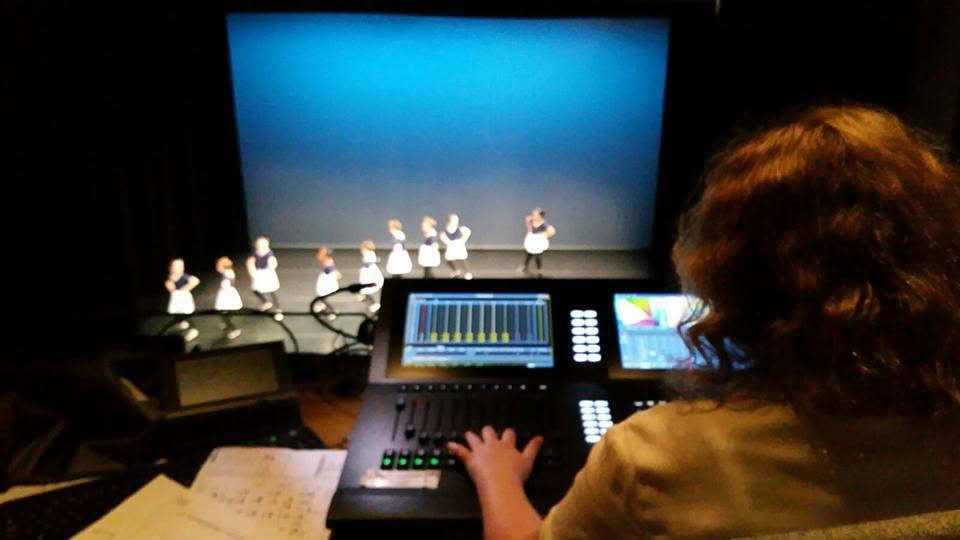
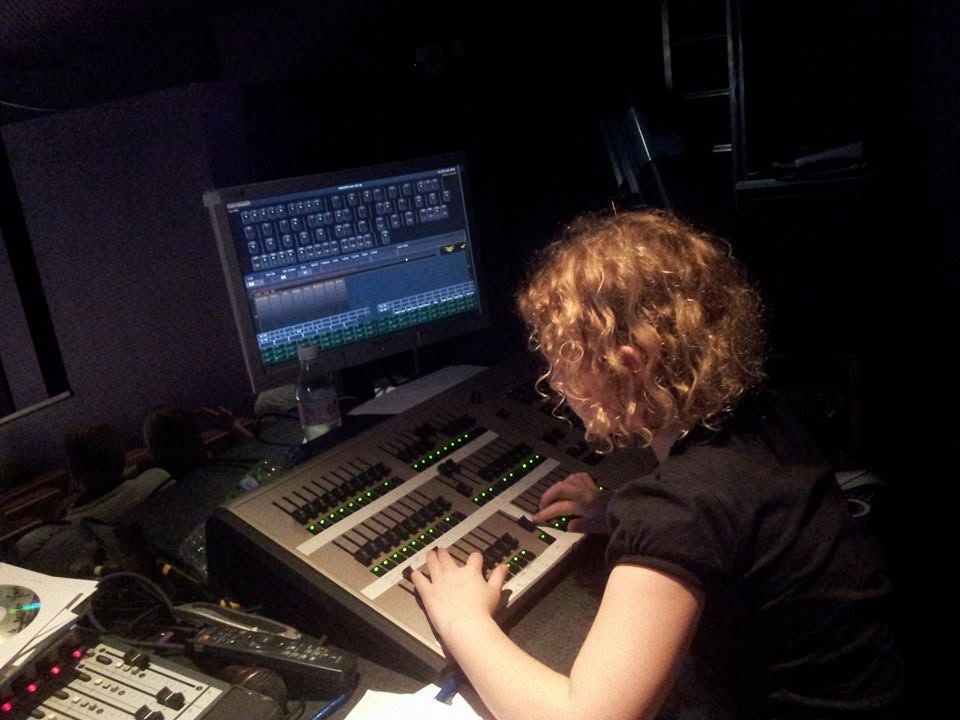
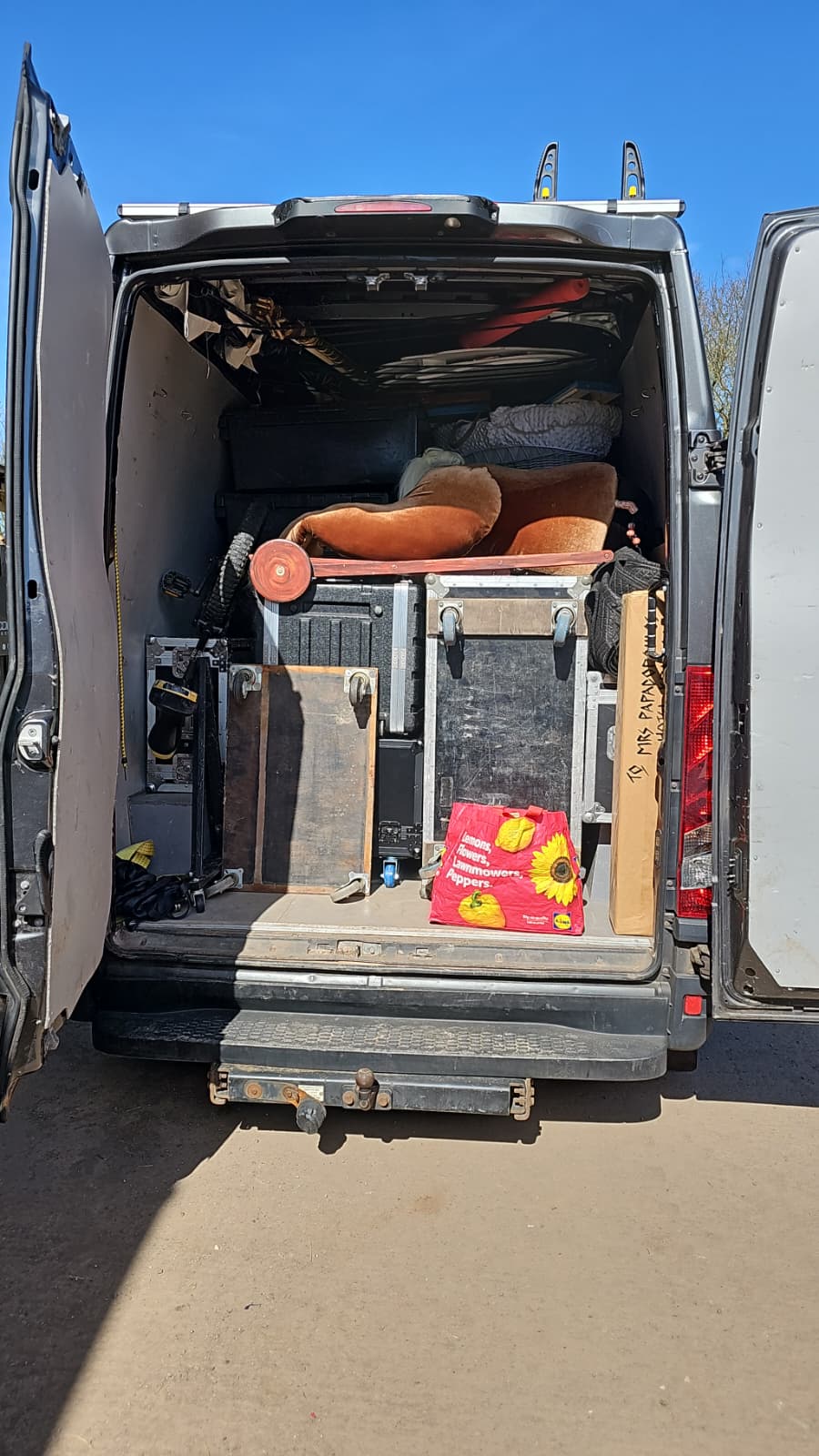
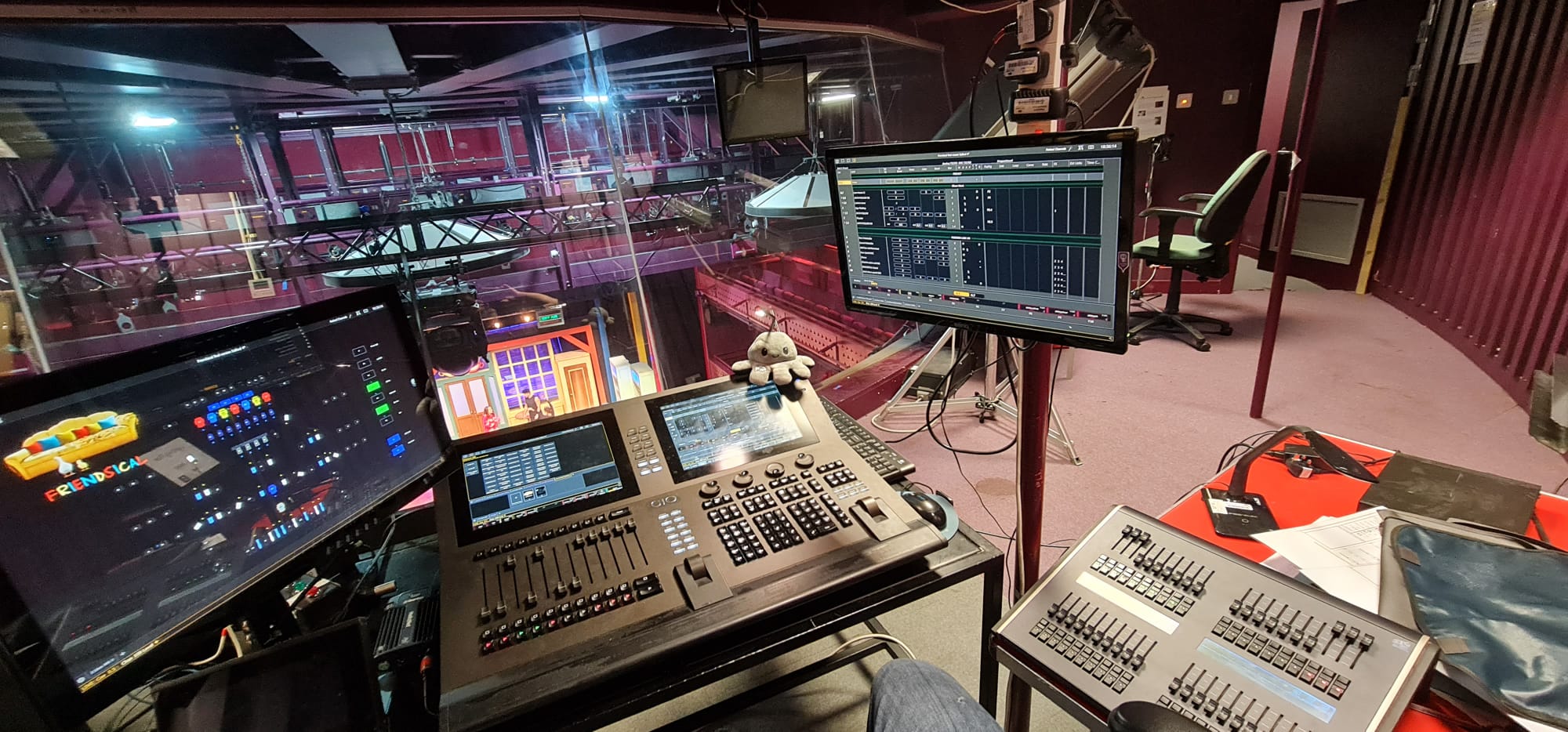
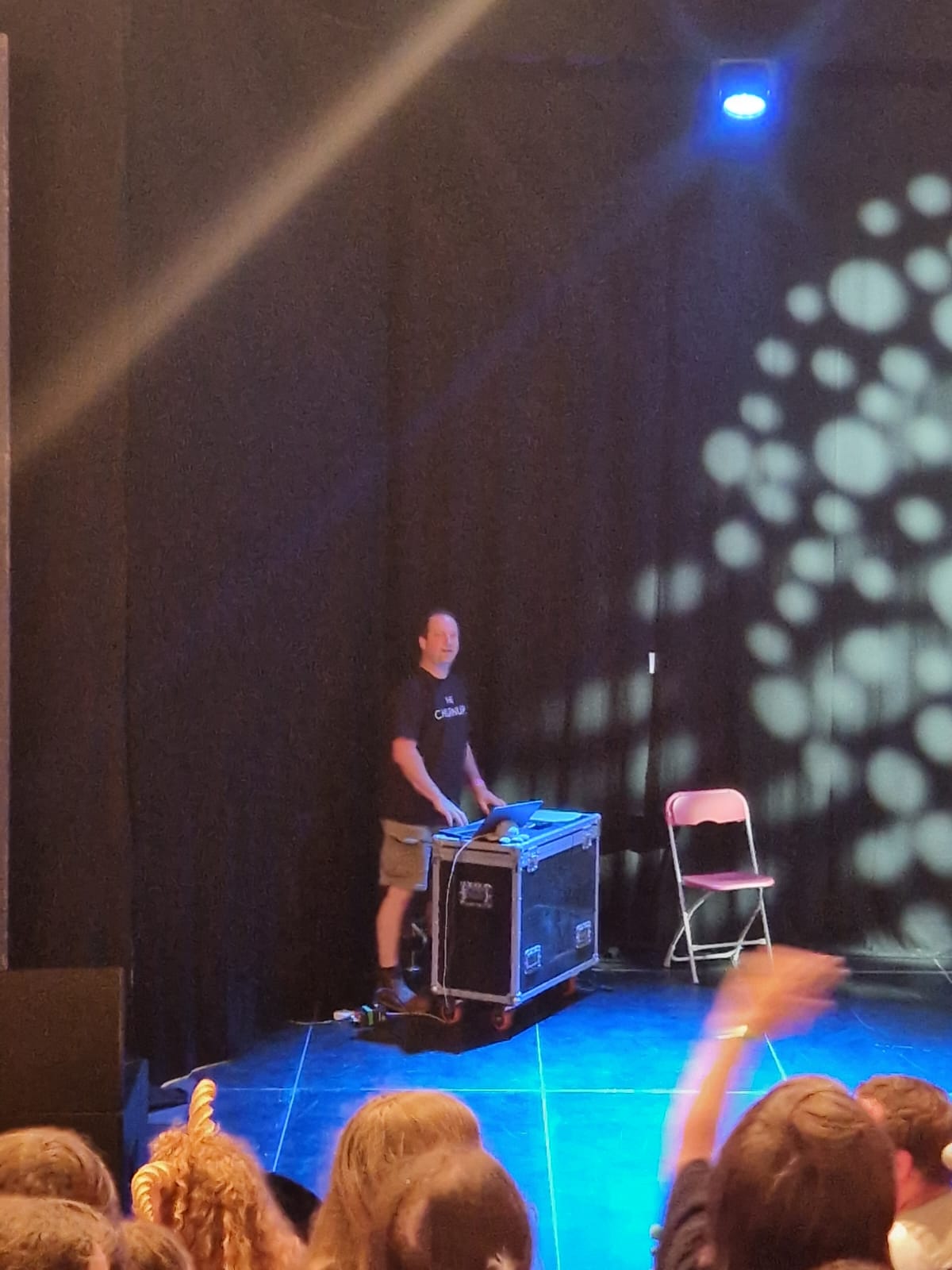
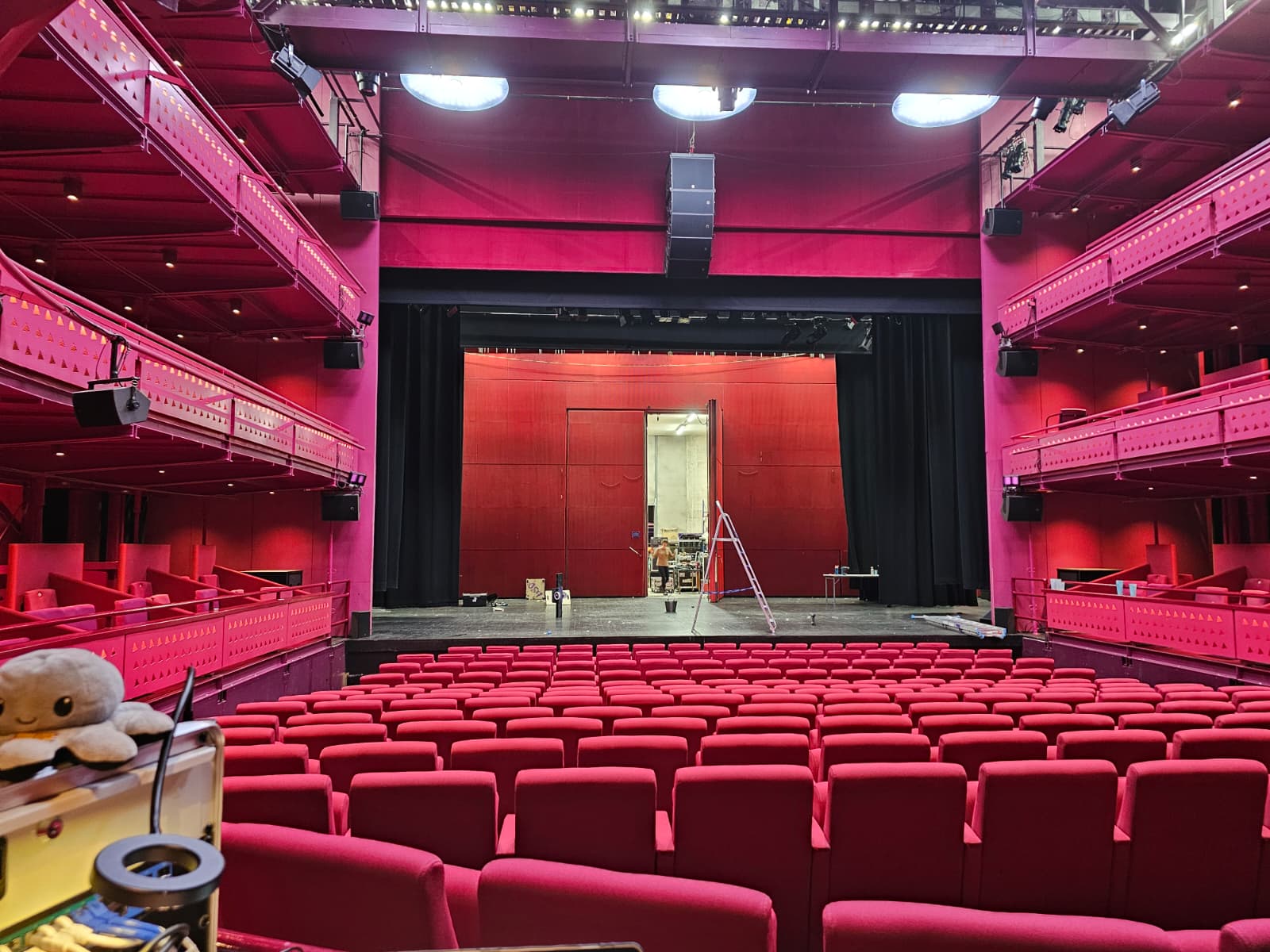
Showtime posts as the house opens, backstage moments from touring life and a regular challenge from each stop on the road: can you guess the get-in venue?
Life on tour
The show is only part of the day.
Showtime posts as the house opens, backstage moments from touring life and a regular challenge from each stop on the road: can you guess the get-in venue?
Instagram
Showtime & backstage
Production photography, house-open moments, lighting and the parts of touring audiences do not usually see.
@stuartbillinghurstFacebook
Projects & updates
Current productions, venue visits, touring updates and longer behind-the-scenes posts.
facebook.com/billinghurstTikTok
Guess the Get-in
A new loading dock, stage door or venue approach at each tour stop. Can you recognise the theatre before the reveal?
@stuartbillinghurst